Case Studies
Anonymised structural stories that show how work was really flowing - and what changed.
These case studies are not about revenue claims or efficiency percentages. They are structural stories - calm, anonymised accounts of how work was actually moving through a business, what the architecture revealed, and how the founder’s lived experience changed once the system was redesigned.
All diagrams are anonymised. No client names, no logos, no sensitive data. Just the patterns, flows, and architectural truths that matter.
Case File 01 – Lettings Agency
From firefighting to a single, stable centre.
The lived problem
The founder felt like the escalation point for everything. Tasks bounced back, updates were scattered across email, WhatsApp, and the CRM, and “urgent” work kept displacing important work. The team were capable, but the operation felt fragile and reactive.
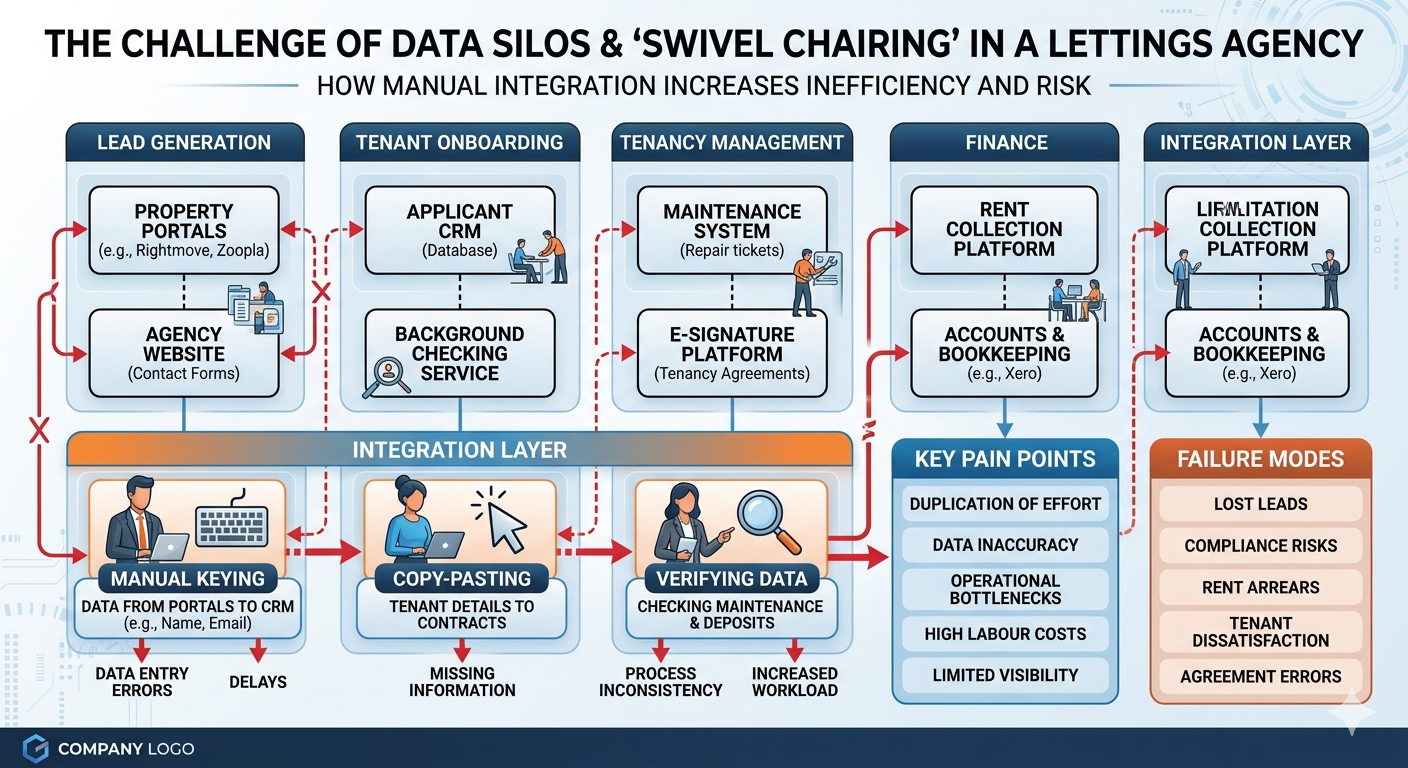
The lived flow (before)
The architectural truth
The Lived Flow Diagram revealed that the agency wasn’t short of systems - it was short of integration. Critical handovers depended on memory, copy/paste, and manual chasing. Referencing and move‑in stages acted as drag points, where work stalled and risk accumulated. The architecture was effectively being held together by people.
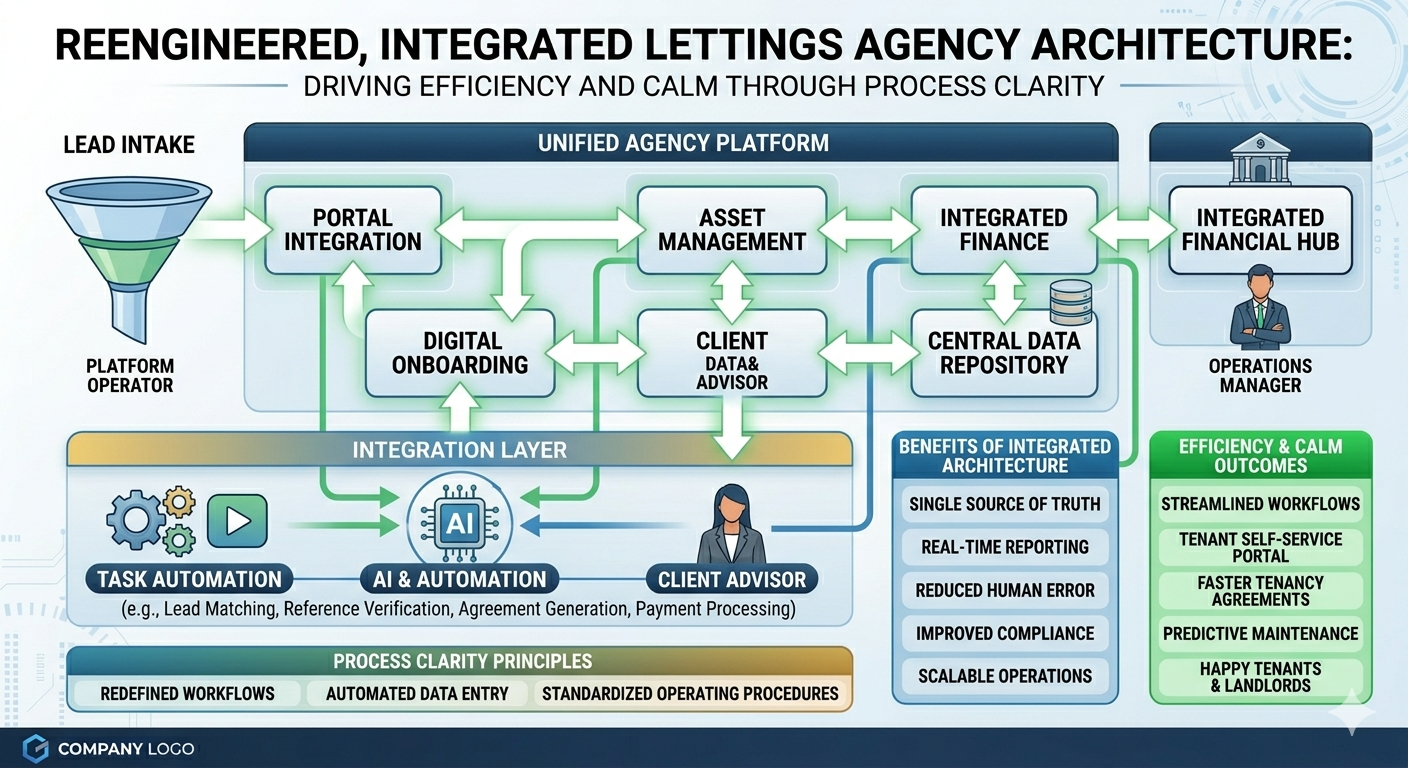
The redesigned architecture (after)
The lived change
Firefighting dropped. The team stopped routing everything back to the founder. Work flowed through a clear, stable centre instead of ricocheting between people and systems. The founder could finally step back from day‑to‑day triage and focus on decisions that actually moved the business forward.
Structural insight: The problem wasn’t “slow staff” or “the wrong CRM”. The problem was a human integration layer doing architectural work.
More case files coming
Additional case files will be added as more structural work is completed and anonymised. Each one will follow the same pattern: a lived problem, a Lived Flow Diagram, the architectural truth, the redesigned system, and the lived change.